Facebook

What Does Mattress Machine Maintenance Cost per Year? The 5% Rule Budget

A mattress machine costs money after the purchase, and the maintenance budget is the number that keeps a line profitable instead of surprising. This guide builds the annual maintenance budget: the five percent rule, the split between parts and labor, the aging curve of the machine, the spare parts policy and the schedule that turns the budget into a routine.
Aug 21st,2026 14 Views
MATTRESS MACHINERY SOLUTIONS

What Does Mattress Machine Maintenance Cost per Year? The 5% Rule Budget

A mattress machine costs money after the purchase, and the maintenance budget is the number that keeps a line profitable instead of surprising. This guide builds the annual maintenance budget: the five percent rule, the split between parts and labor, the aging curve of the machine, the spare parts policy and the schedule that turns the budget into a routine.

5% RULE BUDGET PARTS VS LABOR SPLIT AGING CURVE SPARE PARTS POLICY
5%
of Price per Year for Maintenance
50/50
Parts to Labor Split
8-10
Year Service Life Model
3
Critical Spare Parts Tiers

Executive Commercial Highlight

The maintenance budget is the quiet line item that decides whether a machine runs ten years or dies at five. The five percent rule gives a starting number, the aging curve spreads it over the machine life and the spare parts policy turns it into a routine. A computerized quilting machine such as the IF-Q-1200, a high speed tape edge machine such as the IF-T4 and a roll packing machine such as the IF-CR8 all carry needles, belts and sealing elements that wear on a schedule, so the budget starts by listing the wear parts of the machines you already run. Pair the budget with a complete mattress machinery solution and use the mattress production knowledge library to keep the maintenance plan repeatable.

1. Why the Maintenance Budget Is a Cost, Not an Optional Expense

The purchase price is the visible cost of a mattress machine, and the maintenance is the quiet one that follows it for the whole service life. A machine that costs sixty thousand dollars and runs for eight years consumes a maintenance stream that, under the five percent rule, reaches roughly half its own price again before it is retired. Budgeting that stream is what separates a profitable line from a line that eats its savings in surprises.

The budgeting mistake is to treat maintenance as a reaction: fix it when it breaks. The reactive approach pays the same money, but it adds the downtime of the breakdown, the rush price of the emergency parts and the unplanned stop that interrupts the shift. The proactive approach spends the same allowance on a schedule, keeps the line running and turns the cost into a predictable monthly figure.

Approach What It Pays What It Adds
Reactive Repairs after breakdowns Downtime and rush part prices
Preventive Scheduled parts and labor Predictable monthly cost
Predictive Condition-based replacement Monitoring cost, longest part life
The 5% budget Full annual allowance The baseline every factory starts from

2. Step 1: Build the 5% Baseline From the Machine Price

The five percent rule is the starting number: budget about five percent of the delivered machine price per year for maintenance, spare parts and consumables. The delivered price is the machine price plus shipping and installation, because the maintenance base should cover the machine as it sits in the factory, not just the machine on paper.

The table shows the baseline for the common mattress machines. The share does not scale perfectly with the price, because a high-speed machine with more moving parts carries a higher share, but five percent is the working start. Once the real record exists, the factory replaces the rule with its own history, which is more accurate because it includes the actual wear of the product mix.

Machine Delivered Price 5% Allowance per Year Per Month
IF-Q-1200 quilting 60,000 3,000 250
IF-T4 tape edge 45,000 2,250 188
IF-CR8 roll packing 40,000 2,000 167
IF-P130-2 coiler 85,000 4,250 354

3. Step 2: Split the Budget Between Parts and Labor

The allowance has two destinations: the spare parts and consumables, and the labor that installs them. A common split is about half and half, but the balance shifts with the machine and the factory. The parts share rises with the machine speed and the number of wear elements, while the labor share rises with the number of machines the maintenance team must cover.

The labor share also depends on who does the work. A factory with an internal maintenance team pays the labor as part of the payroll, so the maintenance budget records the parts plus the hours the team spends on the machines. A factory without a team pays service visits, which carry a higher hourly cost but need no standing payroll. Both models fit the same budget; the split just moves between the two lines.

Cost Line Share What It Covers
Spare parts 45-55% Filters, seals, needles, belts, bearings
Maintenance labor 45-55% Internal team hours or service visits
Lubricants and fluids 3-5% Oil, grease, cleaning agents
Monitoring and tools 2-3% Gauges, meters, small instruments

4. Step 3: Add the Aging Curve of the Machine

The maintenance cost is not flat over the machine life. The first year is light, because the machine is new and usually under warranty, and the factory pays mostly the consumables. The middle years run near the five percent baseline. The later years rise, because the seals, belts, bearings and needles approach their replacement intervals and the machine needs the deeper overhauls.

The aging curve turns the flat budget into a ten-year plan. The table shows a sample curve for a sixty thousand dollar machine: the early years sit below the baseline, the middle years sit on it and the later years rise above it, so the total over the life lands close to the rule even though each year differs. Budgeting the curve instead of a flat line avoids the late-life surprise that kills many maintenance plans.

Machine Year Share of Price Allowance Example Typical Work
Year 1 3% 1,800 Warranty covers most repairs; consumables only
Years 2-5 5% 3,000 Preventive routine, regular part replacement
Years 6-8 6-7% 3,600-4,200 Belts, bearings, seals approach replacement
Years 9-10 8% 4,800 Deeper overhauls before the rebuild decision

5. Step 4: Set the Spare Parts Policy by Criticality

The spare parts policy decides where the parts share of the budget goes. The mistake is to stock everything or nothing: a full inventory ties up capital in parts that rarely fail, and an empty shelf turns every failure into a waiting-for-parts stop. The practical policy is to tier the parts by how fast the line stops when the part fails and how long the delivery takes.

Tier one parts are the ones that stop the machine and take weeks to ship, and they stay on the shelf: the needles and belts of a quilting machine, the sealing elements of a roll packer, the corner drive parts of a tape edge machine. Tier two parts can be ordered with a short lead time, and tier three parts are common items the local supplier carries. The table maps the tiers so the budget stocks the right shelf without overstocking.

Tier Policy Examples on a Mattress Line
Tier 1: on the shelf Stock before the need Quilting needles, drive belts, sealing elements
Tier 2: short lead order Order on schedule Filters, seals, lubricants, sensors
Tier 3: local stock Buy as needed Fasteners, common fittings, cleaning agents

6. Step 5: Turn the Budget Into a Schedule That Runs Itself

The budget only works when it becomes a schedule, and the schedule is the list of tasks with their frequencies. A daily check covers the obvious wear, the weekly routine covers the filters and the monthly and quarterly checks cover the deeper systems. Each task belongs to a team member, so the routine runs without depending on a single person remembering everything.

The maintenance record is what closes the loop. Every task, part change and cost is logged against the machine, and the record becomes the factory-specific baseline that replaces the five percent rule. When the record shows that a quilting machine really costs seven percent or a roll packer only four, the budget adjusts to the truth, and the maintenance cost stops being a guess.

Frequency What Is Done Who Owns It
Daily Visual check, lubrication points, air drain Line operator
Weekly Filter check, needle and belt inspection Line operator with checklist
Monthly Sealing element check, tension settings Maintenance team
Quarterly Deeper overhauls, spare part restock Maintenance supervisor
Annual Full service review, budget vs actual Factory management

7. Featured Infinity Mattress Machinery & Equipment

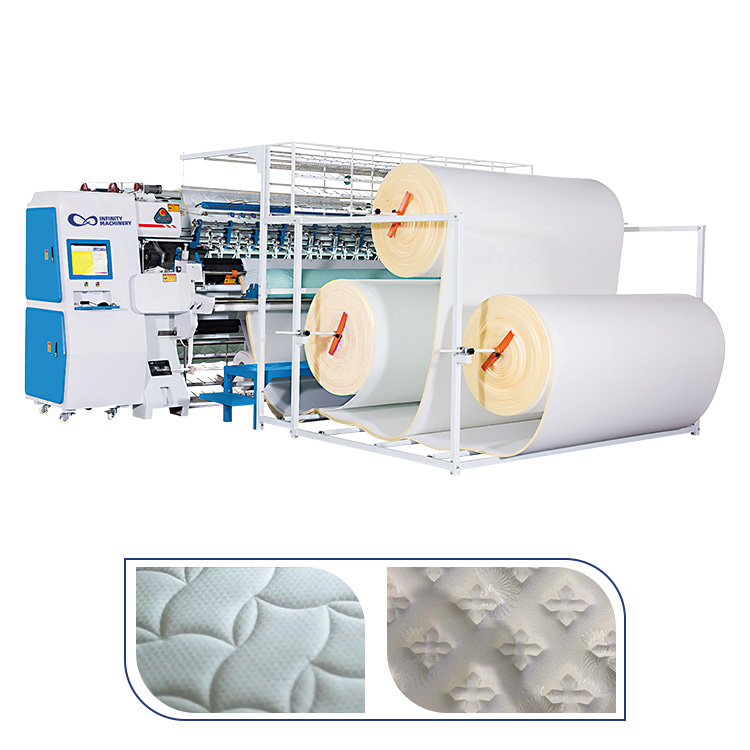
IF-Q-1200 Computerized Chain Stitch Multi-Functional Quilting Machine
COMPUTERIZED QUILTING

IF-Q-1200 Computerized Chain Stitch Multi-Functional Quilting Machine

Computerized quilting machine whose needles, belts and fabric clamps define the wear schedule that the maintenance budget covers.

View Details →
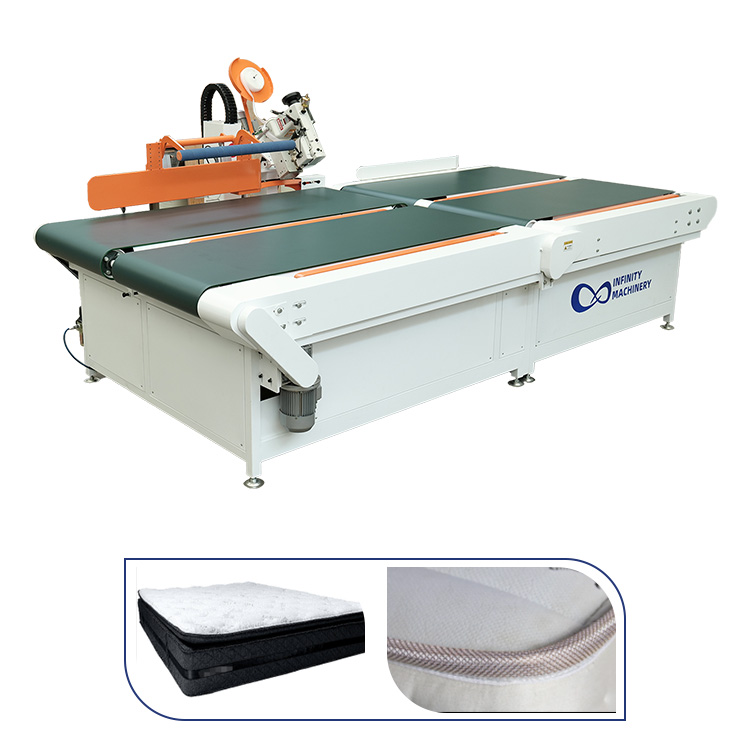
IF-T4 Automatic High Speed Mattress Tape Edge Machine
TAPE EDGE

IF-T4 Automatic High Speed Mattress Tape Edge Machine

High speed tape edge machine whose corner drive and sewing elements carry the fastest wear of the finishing line.

View Details →
IF-CR8 Automatic Mattress Compression and Roll Packaging Machine
COMPRESSION AND ROLL

IF-CR8 Automatic Mattress Compression and Roll Packaging Machine

Automatic compression and roll packaging machine whose sealing elements are the tier-one spare part of the packing station.

View Details →

8. Frequently Asked Questions (FAQ)

Q1: What is the 5% rule for machine maintenance?
The rule budgets around five percent of the machine purchase price per year for maintenance, spare parts and consumables. A machine that costs sixty thousand dollars gets a three thousand dollar annual allowance, which covers the filters, seals, needles and belts plus the labor of the preventive routine.
Q2: Which machine costs the most to maintain per year?
The machines with the highest speed and the most moving parts, because the wear scales with the motion and the stress. A high-speed quilting machine and a compression roll packer carry more needles, belts and sealing elements than a slow assembly station, so their maintenance allowance is a larger share of the price.
Q3: What happens if I skip the preventive maintenance budget?
The skipped budget does not disappear; it returns as unplanned breakdowns, emergency spare parts at higher prices and lost production during the repair. The factory pays roughly the same money either way, but the reactive path adds the downtime and the rush premium on the parts.
Q4: How do I split the maintenance budget between parts and labor?
A common split is about half for the spare parts and consumables and half for the maintenance labor, whether that labor is the internal team or a service visit. The parts share rises with the machine value and the speed, while the labor share rises with the number of machines the team must cover.
Q5: Should the budget change as the machine ages?
Yes, plan an aging curve. The first year is usually light because the machine is new and under warranty, the middle years run near the five percent baseline and the later years rise as seals, belts and bearings approach replacement. A ten-year plan smooths the cost instead of letting the later years surprise the budget.

WANT A MAINTENANCE BUDGET BUILT ON YOUR MACHINE LIST?

Send us your machine list with the purchase prices, and our team can help you build the 5% baseline, the aging curve and the spare parts policy that keep your line running on a predictable budget.

Contact Us

We warmly welcome you to partner with us and build long-term benefits through our future collaborations.
Name *
Email *
Message *
Mobile/ WhatsApp *
Country *
Company Name
Leave a message
Name *
Email *
Message *
Mobile/ WhatsApp *
Country *
Company Name
We use Cookie to improve your online experience. By continuing browsing this website, we assume you agree our use of Cookie.