Facebook

How Much Does a Mattress Quilting Machine Cost? IF-Q-1200 Multi-Needle vs IF-QM1-4

A quilting machine is the highest-value purchase on a mattress panel line, and the price depends on the width, the needle count and the stitch architecture. This guide breaks the quilting machine cost into a transparent model: the price bands by machine class, the chain stitch versus lock stitch difference, the total cost beyond the list price and the output math that turns the price into a payback.
Aug 21st,2026 13 Views
MATTRESS MACHINERY SOLUTIONS

How Much Does a Mattress Quilting Machine Cost? IF-Q-1200 Multi-Needle vs IF-QM1-4

A quilting machine is the highest-value purchase on a mattress panel line, and the price depends on the width, the needle count and the stitch architecture. This guide breaks the quilting machine cost into a transparent model: the price bands by machine class, the chain stitch versus lock stitch difference, the total cost beyond the list price and the output math that turns the price into a payback.

QUILTING MACHINE PRICE IF-Q-1200 VS IF-QM1-4 CHAIN VS LOCK STITCH PAYBACK MODEL
$15K-40K
Working Price Band by Class
1100mm
Typical Multi-Needle Width
10-15%
Freight and Install on Top
18-30
Months to Pay Back

Executive Commercial Highlight

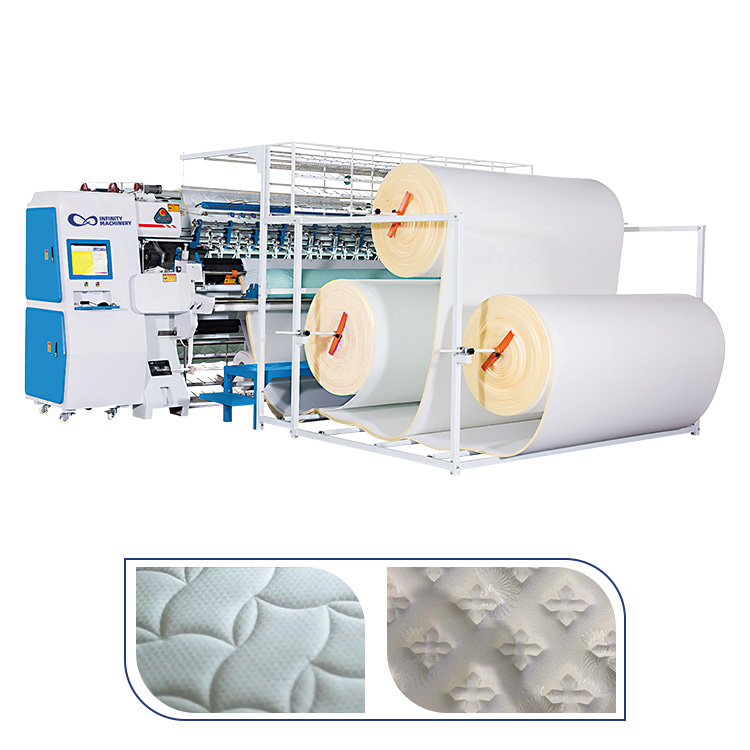
The quilting machine price is a budget number, but the machine that sits behind it decides the whole panel line. The IF-Q-1200 computerized chain stitch quilting machine carries the multi-needle width that a production line needs, while the IF-QM1-4 lock stitch quilting machine answers the factories whose covers demand the cleaner lock stitch finish, and the IF-QS-26 single head quilting machine fits the workshop that quilts a lower panel volume. Compare the three against your panel spec, add the freight and installation allowance, then ask for a complete mattress machinery solution quote that bundles the quilting machine with the rest of the line, and use the mattress production knowledge library to match the machine to your shift output.

1. Why the Quilting Machine Price Is a Line Decision, Not a Single Number

A mattress quilting machine is priced like a car range, not like a single product: the same model family covers a wide band depending on the working width, the number of sewing heads, the stitch type and the level of automation. A factory that quotes one flat price is usually quoting one configuration, and the configuration that fits a four hundred bed plant is not the one that fits a two thousand bed plant.

The buying mistake is to compare list prices across brands without comparing the configuration. The useful comparison is the price per panel, which means the machine price divided by the panels it can actually finish in a shift. That number changes the decision more than the sticker price, because a wider, faster machine costs more up front but finishes a panel at a lower cost per unit.

Machine Class Typical Price Band What It Delivers
Single head 15,000 - 25,000 One panel at a time, low volume, low floor space
Multi-needle mid 28,000 - 45,000 Full panel width in one pass, production standard
Multi-needle high speed 45,000 - 85,000 Wider width, faster drive, higher shift output
Quilting + line package by quote Quilting machine bundled with cutting and stacking

2. Step 1: Price by Working Width and Needle Count

The first price driver is the working width, because the frame, the needle bar and the pattern software all scale with it. A machine that quilts an eleven hundred millimeter panel needs a stronger frame and a longer needle bar than a machine built for a narrow panel, and that engineering shows in the price. The width must match the mattress size you cut, because a machine that is too narrow forces a second pass and wastes the speed you paid for.

The second driver is the needle count. A multi-needle machine like the IF-Q-1200 carries several needles across the bar and sews the whole panel in one pass, which is why it replaces several operators on a busy line. Each needle brings its own tension unit and pattern control, so the price rises with the needle count, and the rise is justified when the panel volume is high enough to keep every head busy.

Working Width Needle Count Panel Volume Fit Price Position
900-1100mm 1-2 Low to mid volume Entry to mid
1100-1300mm 4-6 Mid to high volume Mid
1300mm and up 8+ High volume production High

3. Step 2: Chain Stitch vs Lock Stitch - What the Price Difference Buys

The stitch architecture is the biggest single factor inside the price. A chain stitch head loops the thread through the panel, runs at high speed and needs no bobbin, which keeps the machine simpler, faster and cheaper to run. That is why the IF-Q-1200 chain stitch machine is the workhorse of the production panel line: it finishes panels at a speed that a lock stitch machine cannot match on the same floor.

A lock stitch head like the one on the IF-QM1-4 sews with a bobbin thread and delivers the cleaner, tighter finish that some mattress covers need, but the bobbin system adds cost per head and limits the speed. The decision is not which stitch is better; it is which stitch your cover specification demands. When the customer requires lock stitch panels, the extra price is unavoidable, and when the spec allows chain stitch, the production machine wins on cost per panel.

Stitch Type Speed Head Cost Finish Best Fit
Chain stitch Fast Lower Standard High volume panels
Lock stitch Moderate Higher Cleaner Spec-driven covers

4. Step 3: The Total Cost That Goes Beyond the List Price

The list price is the headline, and the total cost is the number that decides the budget. The freight and the customs duty add a share that depends on the shipping distance and the machine weight, and the installation, the electrical connection and the commissioning add the labor of getting the machine to run. Together these extras typically land between ten and fifteen percent on top of the machine price.

The recurring cost is the quieter line: needles, clamps, belts and the pattern software support. A multi-needle machine wears needles on a schedule, so the budget should include a spare kit at purchase time, when the parts are cheapest and the delivery is already arranged with the machine. Training is the last hidden line, because a machine that nobody can program is a machine that never pays back.

Cost Line Share of Machine Price When It Lands
Machine list price 100% At order
Freight and customs 5-8% Before delivery
Installation and commissioning 4-7% At delivery
Spare kit and training 2-3% With the machine

5. Step 4: Match the Machine to the Shift Output

The price only makes sense against the output the machine must deliver. A low-volume workshop that quilts a few hundred panels a month does not need the multi-needle width, and the single-head machine keeps the investment small. A production factory that must finish a thousand panels a shift needs the multi-needle machine, because the labor it replaces pays for the price difference within the first two years.

The matching table below is the working rule. The number that matters is the panels per shift the factory must deliver, because it decides both the machine class and the operator count. Buying one class above the current need gives headroom for growth; buying one class below guarantees a second shift just to catch up.

Panels per Shift Recommended Class Operator Impact
Up to 200 Single head One operator, one panel at a time
200 - 800 Multi-needle mid One operator, full width pass
800 and up Multi-needle high speed One operator, two shift capacity

6. Step 5: The Payback Math on a Quilting Machine

The payback calculation compares the machine price with the labor and the output it replaces. When a factory moves from hand panel sewing to a multi-needle machine, the machine replaces the equivalent of several operators, and the monthly saving is the wages of those operators minus the machine maintenance and the energy. The payback period is the machine price divided by that monthly saving.

The realistic payback window sits between eighteen and thirty months on a single shift and shortens on two shifts, because the machine cost stays fixed while the output doubles. The payback also improves when the machine is part of a complete mattress machinery solution, because the quilting machine, the cutter and the stacker are sized together and the line never waits on one station.

Scenario Monthly Saving Payback on $35K Machine
Replaces 2 hand operators 1,800 ~19 months
Replaces 3 hand operators 2,600 ~14 months
Two shift operation 3,400 ~10 months

7. Featured Infinity Mattress Machinery & Equipment

IF-Q-1200 Computerized Chain Stitch Multi-Functional Quilting Machine
MULTI-NEEDLE CHAIN STITCH

IF-Q-1200 Computerized Chain Stitch Multi-Functional Quilting Machine

Multi-needle chain stitch quilting machine that sews a full panel width in one pass, the production standard for high volume mattress panel lines.

View Details →
IF-QM1-4 Automatic Lock Stitch Quilting Machine
LOCK STITCH

IF-QM1-4 Automatic Lock Stitch Quilting Machine

Automatic lock stitch quilting machine whose cleaner finish answers the mattress covers that demand the tighter stitch quality.

View Details →
IF-QS-26 Computerized Single-Head Quilting Machine
SINGLE HEAD

IF-QS-26 Computerized Single-Head Quilting Machine

Computerized single head quilting machine that keeps the investment small for the workshop quilting a lower panel volume.

View Details →

8. Frequently Asked Questions (FAQ)

Q1: What is a realistic budget range for a mattress quilting machine?
A single-head computerized quilting machine typically lands between fifteen and forty thousand dollars, and a multi-needle production model like the IF-Q-1200 sits in the middle of that band depending on the width and the automation. The list price is only the start; the freight, the installation and the first set of needles and clamps add ten to fifteen percent before the machine sews the first panel.
Q2: Why does a multi-needle quilting machine cost more than a single-head machine?
The price scales with the number of heads, the working width and the software. A multi-needle machine sews a whole panel width in one pass, so it needs a wider frame, more needles with independent tension, a stronger drive and a pattern software that coordinates every head. That engineering is what the extra cost buys, and it is the same reason the machine replaces several operators on a busy panel line.
Q3: What is the difference between chain stitch and lock stitch pricing?
A chain stitch head is simpler, runs faster and costs less to maintain, which is why machines like the IF-Q-1200 carry it as the workhorse of the panel line. A lock stitch head like the one on the IF-QM1-4 costs more per head because it needs the bobbin system, but it delivers the cleaner finish that some mattress covers require. The right choice is the stitch your cover spec demands, not the cheaper head.
Q4: How much should I budget on top of the machine price?
Plan on ten to fifteen percent for freight, customs and installation, plus a spare kit with needles, clamps and belts that is about two percent of the machine value. The hidden line is the training: a multi-needle machine only pays back when the operator can run the pattern software, so budget a week of on-site or remote training into the same purchase.
Q5: How fast does a quilting machine pay back its price?
The payback comes from the labor the machine replaces and the panels it turns out per shift. A factory that currently sews panels by hand and moves to a multi-needle machine often recovers the machine cost within eighteen to thirty months, and the payback shortens when the machine runs two shifts. The math is simple: the panel output per day times the shift days pays for the machine before it needs a major service.

WANT A QUILTING MACHINE QUOTE BUILT ON YOUR PANEL SPEC?

Send us your panel width, the stitch type your covers require and the panels per shift you need, and our team can size the right quilting machine and quote the full cost including freight and installation.

Contact Us

We warmly welcome you to partner with us and build long-term benefits through our future collaborations.
Name *
Email *
Message *
Mobile/ WhatsApp *
Country *
Company Name
Leave a message
Name *
Email *
Message *
Mobile/ WhatsApp *
Country *
Company Name
We use Cookie to improve your online experience. By continuing browsing this website, we assume you agree our use of Cookie.