In a typical mattress production line, the gap between quilting and sewing is filled by manual labor. Quilted fabric rolls come off the quilting machine and must be cut into individual panels, stacked, and transferred to the sewing station. This manual step is slow, inconsistent, and often creates a backlog that slows down the entire finishing line.
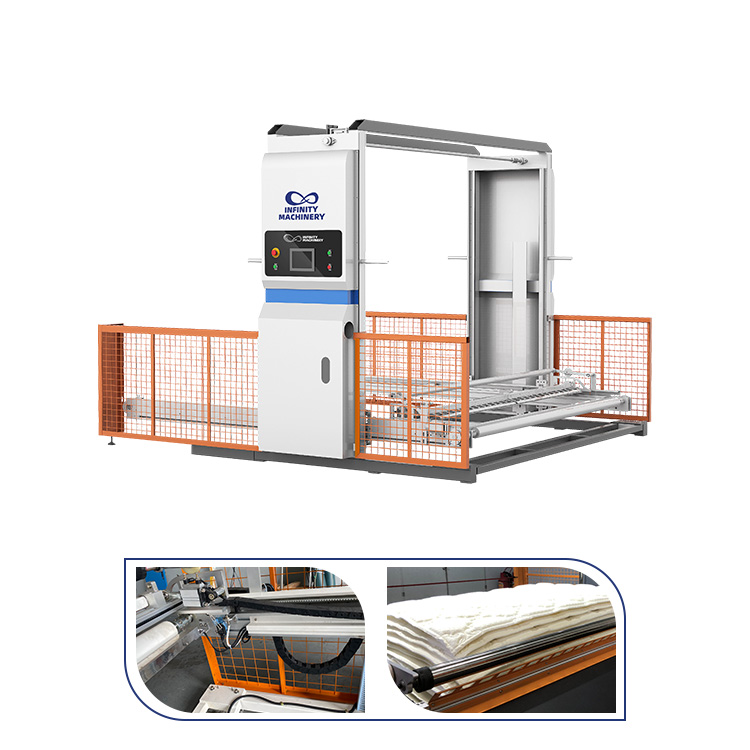
The IF-QFS Automatic Quilted Fabric Stacking Machine eliminates this bottleneck by receiving the continuous quilted fabric output from the quilting machine, automatically cutting it to programmed panel lengths, and stacking the finished panels — all without operator intervention between cuts.
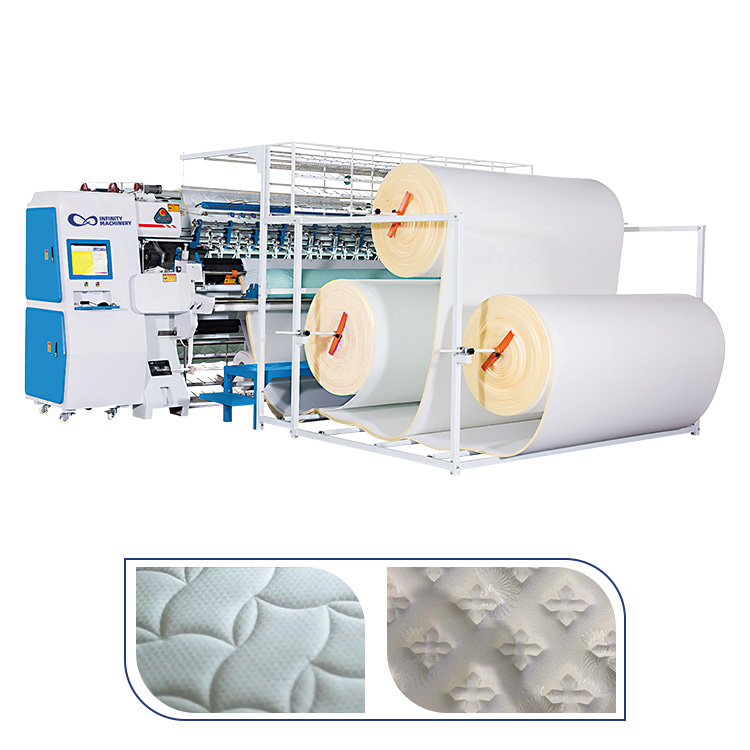
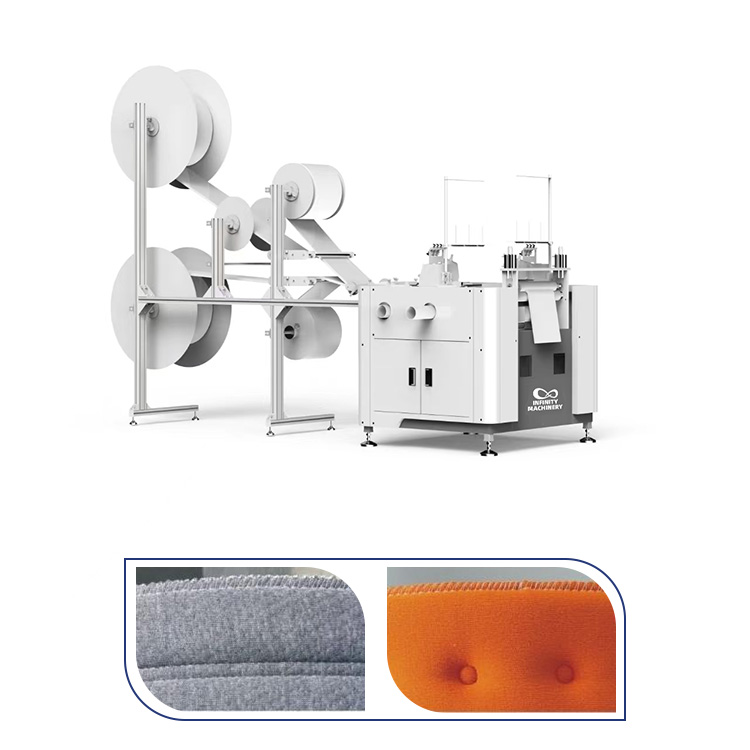
This guide covers the IF-QFS technology, specifications, integration with the IF-Q-1200 Multi-Needle Quilting Machine and the IF-SB-A2 Double-Head Sewing Machine, and the ROI of automating the quilting-to-sewing material flow.
Programmable panel lengths
Eliminates manual handling
Runs both quilter + stacker
Consistent panel dimensions
In most mattress factories, the quilting machine produces fabric faster than the sewing station can use it. This creates a buildup of quilted fabric that must be managed between the two stations. Without an automated system, factories typically assign 1-2 workers to cut quilted fabric rolls into panels, stack them by mattress size, and deliver them to the sewing station.
This manual process has several hidden costs:
The IF-QFS addresses all of these issues by automating the cutting and stacking process directly inline with the quilting machine.
The IF-QFS is positioned directly after the quilting machine. The continuous quilted fabric output feeds directly into the IF-QFS infeed section. Here is the step-by-step process:
| Specification | Value |
|---|---|
| Max fabric width | 2,400mm |
| Max roll weight | 500kg |
| Cutting accuracy | ±2mm |
| Panel length range | 500-2,500mm (programmable) |
| Stack capacity | Up to 200 panels per stack |
| Cycle time per panel | 3-8 seconds (size dependent) |
| Model presets | Up to 50 mattress models |
| Power consumption | 2.5 kW (average) |
| Operators | 0 (fully automatic) — 1 operator can manage both quilter and stacker |
| Factor | Manual Cutting | With IF-QFS |
|---|---|---|
| Workers | 1-2 | 0 (shared with quilter) |
| Cutting accuracy | ±5-10mm | ±2mm |
| Fabric waste | 8-12% | 3-5% |
| Changeover time | 10-15 min | Under 1 min |
| Annual labor cost | $23,040-46,080 | $0 dedicated |
| Annual fabric waste (500K m) | $180,000-270,000 | $67,500-112,500 |
For a factory using 500,000 linear meters of quilted fabric per year at $4.50/meter:
The IF-QFS is priced at approximately $8,000-12,000 depending on configuration.
Payback: ~$10,000 ÷ ($158,040 ÷ 12) = 0.76 months (under 3 weeks)
The IF-QFS is designed to work as part of a three-machine production cell:
The material flow is seamless: quilted fabric enters the IF-QFS, cut panels exit and are stacked, and the sewing operator picks up pre-cut, pre-stacked panels as needed. No manual cutting, no fabric waste from mis-measurement, no delays.
Store up to 50 panel size configurations. Switch between models in under 1 minute.
Maintains consistent fabric tension during feeding, preventing stretching or wrinkling before cutting.
Sharp, durable cutting blade produces clean, square edges. No fraying or uneven cuts.
Tracks the number of panels cut, total fabric used, and production time per model.
These three machines form a complete production cell — from raw fabric rolls to finished mattress covers ready for tape edge or flanging.
Our finishing line specialists can help you integrate the IF-QFS with your existing quilting and sewing equipment for a seamless production flow.