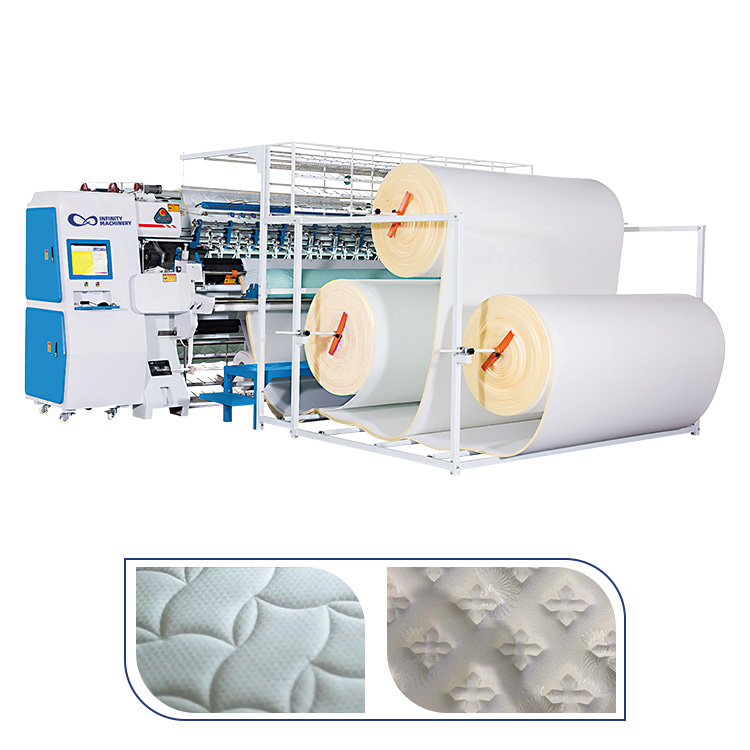
A high-speed quilting roll should be treated as a controlled material path, not as a dryer problem. The practical sequence is to inspect the roll edge, confirm the feed path, verify the needle and stitch, watch the take-up and then quarantine the first panel that shows a wrinkle. The IF-Q-1300 Computerized Chain Stitch Multi-Needle Quilting Machine gives a production team a stable control point for repeatable quilting work. For a complete mattress machinery solution, connect the quilting specification with the fabric path, inspection method and maintenance planning library before changing speed.
The first mistake happens before the needle starts: the operator loads a roll whose edge is already wandering. A crooked edge forces the material path to compensate, and the compensation becomes a diagonal fold when the top fabric, batting and backing do not arrive together. The dryer can remove moisture, but it cannot restore the layer alignment that was lost at the feed.
The better decision is to inspect the roll edge across a short length before production. Check whether the fabric edge is square to the core, whether the roll has telescoped and whether the first layers are loose. If the edge is not stable, mark the issue, re-seat the roll and sew a first-piece panel. Starting with a bad roll creates a long inspection problem; correcting the load creates a short setup task.
The second mistake is treating feed tension as one number for every material. A quilted roll has several tension zones: the supply roll, the fabric guide, the needle bed and the take-up. A setting that is gentle enough for a stretch cover may be too loose for a dense backing, while a setting that holds a dense backing may pull a softer top into a wave.
Use a tension map instead of a single adjustment. Write down the material family, the roll condition, the guide position and the first-piece result. Change one zone at a time and keep the test panel beside the settings card. This prevents the common reaction of tightening every knob after a wrinkle appears, which can move the wrinkle from the feed side to the take-up side.
The third mistake is assuming that a wrinkle is always a fabric problem. A dull needle, a damaged needle point or an incorrectly set presser foot can change how the top layer enters the stitch. The stitch then grips one layer earlier than another, and the difference travels down the panel as a puckered line. The machine may continue running, which makes the defect harder to notice until the roll is inspected.
The operator should inspect the needle, thread path, presser contact and first stitch before increasing speed. Run a short test panel with the same material stack that will enter production. Look at the top, underside and edge margin. A clean panel is not a promise of perfect output, but it is a useful baseline; a wrinkled first panel is a reason to stop before more material is committed.
The fourth mistake is checking only the face of the quilted roll while the take-up hides the underside. A roll can look flat at the operator side and still carry a compressed edge, a loose center or a diagonal pull on the back. When the roll is later unwrapped for cutting or assembly, the hidden distortion becomes a visible waste event.
Build a take-up inspection into the first-piece routine. Check the roll edge, the center tension and the way the layers meet the shaft. The operator does not need a complicated measurement system to find the early signal: a repeatable visual mark, a flat reference strip and a short inspection record are enough to compare one setup with the next. If the take-up is not square, stop and correct the hardware before adjusting the fabric.
The fifth mistake is treating speed as the cure for an unstable path. When a new fabric, pattern or batting stack enters the line, the operator increases speed before the first-piece behavior is understood. The result is not simply more panels per hour; it is more material moving through the same unresolved tension problem. A faster defect is still a defect, and it is harder to isolate because more variables change together.
Use a staged decision: confirm the roll, sew the first panel, inspect both faces, then make one speed change and repeat the check. The goal is not to claim a universal speed. The goal is to define a safe operating window for the actual material and pattern. The IF-Q-1400 Computerized Multi-Needle Quilting Machine can be evaluated within that window when the factory compares patterns and material stacks rather than copying a setting from another line.
The sixth mistake is sending a visibly wrinkled roll to drying in the hope that heat will make the issue disappear. Drying can change moisture and hand feel, but it does not correct a skewed seam, a displaced layer or an uneven take-up. It may make the roll more difficult to rework because the defect becomes part of a larger finished batch.
Quarantine the first suspect section and label it with the material, pattern, machine, operator, time and setting change. Then compare it with the last good section. This creates a small decision table: continue if the wrinkle is isolated and the cause is understood; rework if the layer can be recovered; hold the roll if the path remains unstable. A short hold is easier to manage than a mixed batch of uncertain panels. The IF-Q-1200 Computerized Chain Stitch Multi-Functional Quilting Machine can be included in the same review when the factory needs to compare flexible quilting configurations.
Share your material stack, quilt pattern and current wrinkle point with our team. We can help map the quilting head, feed path and inspection routine around your production line.