Complete technical guide for mattress sewing machines covering panel sewing and linear sewing machine types, stitch technology, servo motors, feeding systems, and production line integration for manufacturers.
TECHNICAL GUIDE
Mattress Sewing Machines: A Complete Technical Guide for Manufacturers
Everything you need to know about mattress sewing machine types, stitch technology, speed ratings, and production integration
Sewing Machines Technical Guide Mattress Production
Mattress sewing machines are the backbone of any mattress finishing department. They join the top panel, bottom panel, and border fabric into a complete mattress cover — a step that directly determines the quality and appearance of the finished product. Yet many manufacturers treat sewing machines as a commodity purchase, focusing only on price without understanding the technical differences that affect production speed, stitch quality, and fabric compatibility.
This technical guide covers the key machines used in mattress sewing — including double-head panel machines like the IF-SB-A2 Front and Back Double-heads Mattress Sewing Machine and linear sewing machines like the IF-SZX1 Linear Sewing Machine. We explain stitch types, sewing head configurations, feeding systems, servo motor technology, and how to match machine specifications to your production requirements.
Whether you are setting up a new sewing station or evaluating an upgrade, this guide gives you the technical knowledge to make an informed decision.
3
Main Machine Types
For Mattress Sewing
400+
Mattresses Per Shift
With 2 Operators
2
Days Operator Training
For Automatic Machines
Types of Mattress Sewing Machines
Mattress sewing machines fall into three main categories based on their function in the production line:
Panel Sewing Machines
Sew the top and bottom panels to the border fabric. The most critical sewing operation. Available in single-head and double-head configurations. Double-head machines like the IF-SB-A2 sew both panels simultaneously.
Linear Sewing Machines
Handle straight-line stitching of border fabric — joining strip ends into loops and adding reinforcement seams. Run automatically at 3-4× the speed of manual linear sewing. The IF-SZX1 is the primary model in this category.
Specialty Sewing Machines
Fabric expanders, thread trimmers, and automatic handling systems that support the main sewing operation. These reduce manual handling and improve consistency.
Key Technical Specifications Explained
When comparing mattress sewing machines, these five specifications have the greatest impact on performance:
1. Sewing Head Configuration
The sewing head is the core of the machine. Most mattress sewing machines use industrial lock stitch heads from manufacturers like JUKI, Brother, or Pegasus. The key distinction is single-head vs double-head:
- Single-head machines — One sewing head that must sew the top panel and bottom panel in separate passes. This means the operator loads the mattress twice. Output: 200-300 mattresses per shift.
- Double-head machines (like IF-SB-A2) — Two independently controlled sewing heads that sew both panels simultaneously. The operator loads the mattress once, and both panels are sewn in a single cycle. Output: 400-600 mattresses per shift.
The double-head configuration effectively doubles panel sewing throughput with the same operator labor. This is why double-head machines have become the industry standard for mid-to-high volume production.
2. Servo Motor Technology
Modern mattress sewing machines use direct-drive servo motors instead of clutch motors. This has several advantages:
- Energy efficiency — Servo motors consume up to 70% less electricity than clutch motors because they only draw power when sewing. A clutch motor runs continuously.
- Precise speed control — The operator can adjust sewing speed from 200 to 5,000 stitches per minute with ±1% accuracy. This allows precise speed matching for different fabric types.
- Instant start-stop — No clutch delay. The needle stops within one stitch position, reducing thread waste and improving seam consistency.
- Less heat generation — Servo motors run cooler, reducing thermal stress on the sewing head and extending component life.
3. Feeding System
The feeding system moves the fabric through the sewing head. Different feeding mechanisms suit different fabric types:
- Standard drop feed — The most common system, using feed dogs (toothed metal strips) that move the fabric from below. Suitable for most knitted and woven mattress fabrics.
- Synchronous feed — The top and bottom feed dogs move in unison, preventing fabric layers from shifting relative to each other. Critical for thick or slippery fabrics. The IF-SB-A2 uses a synchronous feeding system for consistent seam quality.
- Adjustable expanding device — Tensions the fabric evenly across the seam width as it feeds, preventing puckering. This is a feature specific to mattress sewing machines that standard industrial sewing machines lack.
4. Stitch Type and Length
Most mattress sewing uses a lock stitch (also called double-thread chain stitch) formed by the needle thread and a bobbin thread interlocking at each stitch. Key parameters:
- Stitch length — Typically 3-6 mm for mattress sewing. Shorter stitches (3-4 mm) for decorative visible seams. Longer stitches (5-6 mm) for internal structural seams. Adjustable on all modern machines.
- Stitch consistency — Measured as variation in stitch length across a seam. Good machines maintain ±0.2 mm variation. Poor machines can vary by ±0.5 mm or more, causing visible seam irregularities.
- Needle system — Most mattress sewing machines use standard industrial needles (DP×5 or 135×17). The needle size is selected based on fabric weight: thinner fabrics use size 16-18, heavy fabrics use size 20-23.
5. Fabric Compatibility Range
A mattress sewing machine must handle a wide range of materials. The table below shows the typical fabric compatibility for double-head panel sewing machines:
| Fabric Type |
Compatibility |
Recommended Needle |
Max Speed |
| Knitted (standard) |
Excellent |
DP×5 #18 |
4,500 spm |
| Polyester blend |
Excellent |
DP×5 #18 |
4,000 spm |
| Cotton blend |
Excellent |
DP×5 #18 |
4,000 spm |
| Light jacquard |
Good |
DP×5 #20 |
3,500 spm |
| Heavy jacquard |
Moderate |
DP×5 #22 |
3,000 spm |
| Multi-layer laminated |
Moderate |
DP×5 #23 |
2,500 spm |
How Automatic Features Improve Production Efficiency
Modern mattress sewing machines incorporate several automatic features that reduce operator effort and improve consistency:
- Automatic thread trimming — The machine cuts both needle and bobbin threads automatically at the end of each seam. This eliminates the manual thread-cutting step and saves 3-5 seconds per mattress.
- Auto-lift presser foot — The presser foot lifts automatically when sewing stops, allowing the operator to reposition the mattress quickly without manual foot lifting.
- Fabric edge sensor — Detects the edge of the fabric and adjusts the sewing line automatically, maintaining consistent seam allowance without operator adjustment.
- Back-tack function — Automatically reverse-stitches at the start and end of each seam to prevent unraveling. Adjustable stitch count and length.
- Programmable stitch patterns — The operator can save multiple stitch patterns (length, tension, back-tack settings) for different mattress models and switch between them with one button press.
Single-Head vs Double-Head: A Direct Comparison
| Factor |
Single-Head |
Double-Head (IF-SB-A2) |
| Sewing passes per mattress |
2 (top then bottom) |
1 (both simultaneously) |
| Cycle time per mattress |
3-4 minutes |
1.5-2 minutes |
| Output per shift |
200-300 |
400-600 |
| Operators required |
1 |
1 |
| Seam consistency |
Good |
Excellent (synchronous feed) |
| Training time |
3-5 days |
2-3 days |
Integrating Sewing Machines into Your Production Line
A sewing station does not operate in isolation. It receives materials from quilting and cutting, and sends finished mattresses to flanging or tape edge. Here is how to plan the workflow:
- Position the linear sewing machine first. The IF-SZX1 prepares border fabric strips — stitching them to length and adding reinforcement. Completed borders go onto a rolling cart between the machines.
- Position the panel sewing machine next. The IF-SB-A2 takes completed borders from the cart, along with quilted top and bottom panels, and sews them together. Output goes directly to the finishing station.
- One material handler can support both machines, transferring materials between stations and keeping the workflow moving.
Total workforce for the sewing station: 2 machine operators + 1 material handler. Output: 400-600 finished mattresses per shift.
3 Machines for a Complete Sewing and Finishing Station
These three machines form the core of a professional mattress sewing and finishing department.
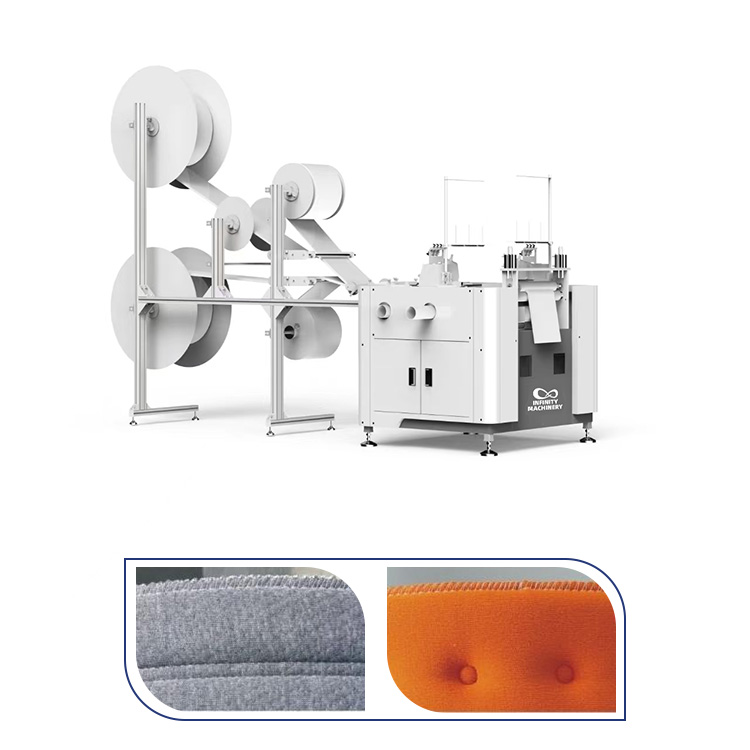
PANEL SEWING
Dual-head simultaneous panel sewing. Servo-driven. Synchronous feeding. Cuts cycle time by 50% vs single-head machines. 400-600 mattresses per shift.
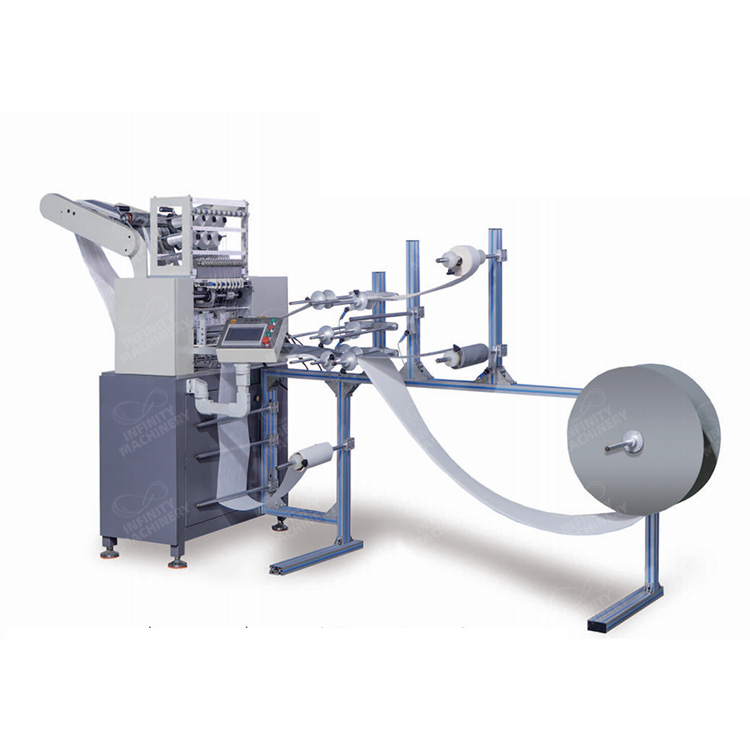
LINEAR SEWING
Automatic border strip stitching. Thread-breaking detection. 3-4× faster than manual linear sewing. Prepares borders for the panel sewing machine.
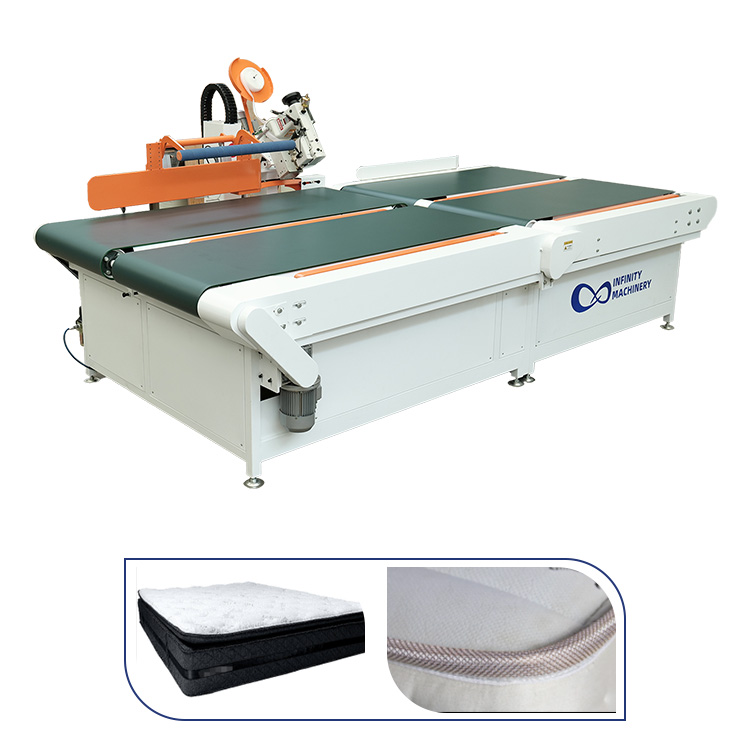
RECOMMENDED UPGRADE
High-speed automatic tape edge finishing. The natural next step after your sewing station for a complete mattress finishing line.
Choosing the Right Sewing Machine for Your Factory
Here is a practical decision framework based on your production volume:
- Under 100 mattresses/day — A single-head panel sewing machine with a basic linear sewing attachment may be sufficient. Focus on reliable stitch quality and ease of operation.
- 100-300 mattresses/day — A double-head machine like the IF-SB-A2 is the right choice. The doubled panel sewing throughput justifies the investment within months.
- 300+ mattresses/day — Full sewing station: IF-SB-A2 for panels + IF-SZX1 for borders. Add the IF-T4 tape edge machine to complete the finishing line.
Regardless of volume, choose machines with servo motors, synchronous feeding, and automatic features (thread trimming, presser foot lift). These features pay for themselves through reduced labor costs and higher output within 6-12 months.
Need Help Choosing a Mattress Sewing Machine?
Our sewing specialists can help you select the right combination of panel sewing and linear sewing machines for your fabric types, production volume, and budget. Get a free consultation.

