When I decided to start my mattress factory five years ago, I had no idea how complex the journey would be. I remember sitting at my kitchen table, staring at spreadsheets filled with machinery costs, supplier lists, and factory layout sketches. There were nights I questioned whether I was making the right decision. But with careful planning, the right equipment, and a lot of persistence, what started as a small workshop with three machines grew into a full-scale production facility producing over 500 mattresses per month. This guide contains everything I wish someone had told me before I started — the practical steps, the hidden costs, the machinery essentials, and the strategies that actually work when building a mattress manufacturing business from the ground up.
Before I bought a single machine, I spent three months doing nothing but research. The mattress industry is massive — the global market is valued at over $30 billion and continues to grow as populations expand and sleeping habits become a health priority. But jumping in without understanding your market is the fastest way to burn through your capital.
The first question I asked myself was: what kind of mattress manufacturer do I want to be? There are three main paths you can take:
I chose the mid-range specialty path, focusing on pocket spring and hybrid mattresses. This decision shaped every subsequent choice — from the machinery I purchased to the suppliers I approached and the sales channels I developed.
Your business plan should cover at least these elements: executive summary, market analysis, competitive landscape, operational plan, marketing strategy, and financial projections. I cannot stress enough how important it is to project your costs realistically. Many beginners underestimate raw material costs by 20-30% and overestimate production capacity in the first year. Build in a buffer — your future self will thank you.
One of the first practical decisions I faced was where to set up my factory. Location matters far more than I initially realized. For a mattress manufacturing facility, you need a minimum of 500 square meters to start, though I would recommend 800-2000 square meters if your budget allows. This gives you room to grow without relocating within the first year.
Here are the critical factors I evaluated when choosing my factory location:
Your factory floor layout should follow a logical production flow. I organized mine as a straight-line flow: raw material storage at one end → cutting and preparation → spring manufacturing → quilting and sewing → assembly and tape edging → packing → finished goods storage at the other end. This minimizes backtracking and material handling time, which directly improves productivity.
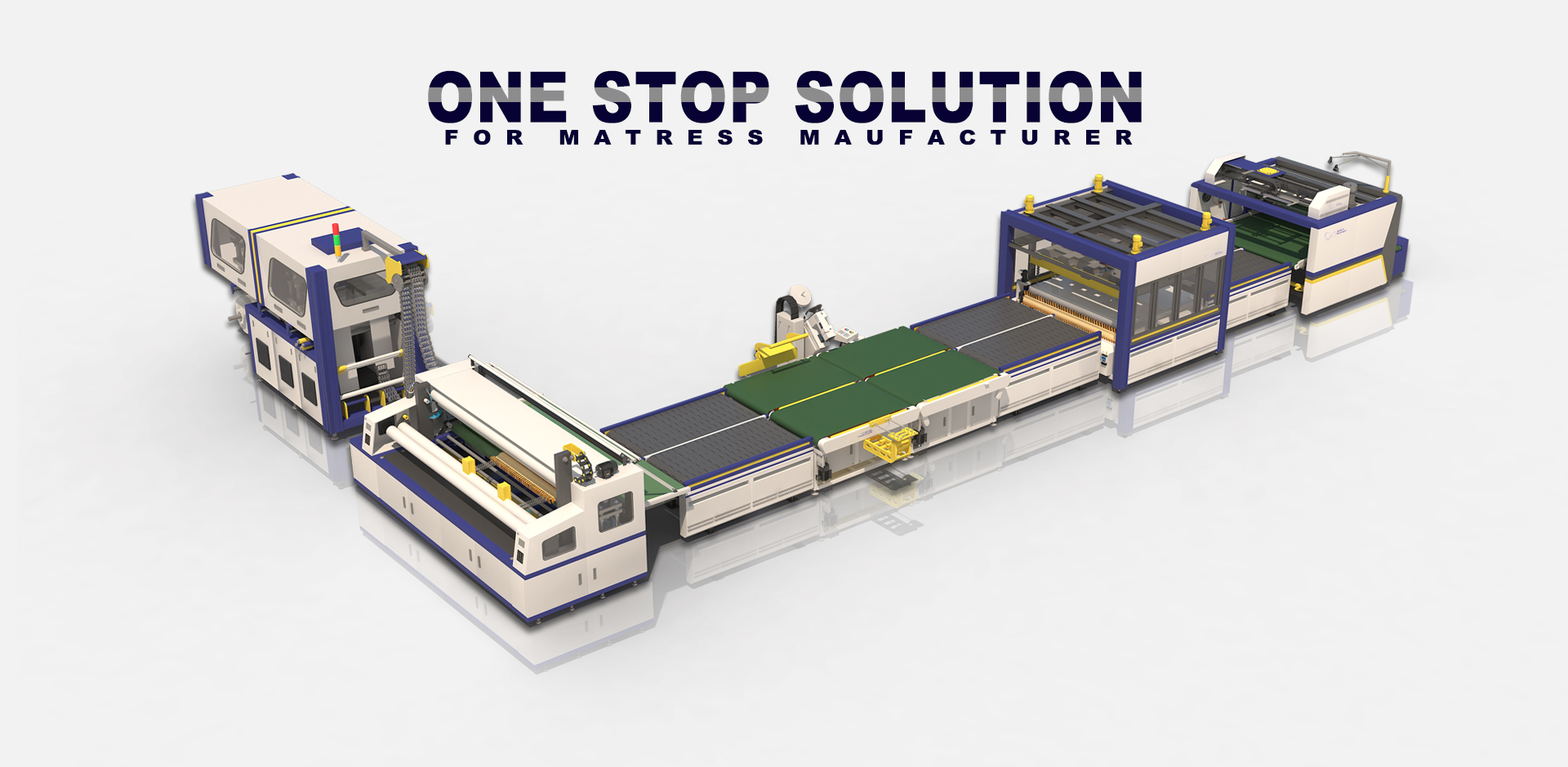
If you are planning a larger operation, consider an integrated production line approach. Infinity Mattress Machinery's IF-APL Mattress Automatic Production Line is designed specifically to optimize factory layout and workflow, connecting multiple processes into a seamless manufacturing flow.
This was the most intimidating part of my journey — selecting the right machinery. The mattress production process involves several distinct stages, each requiring specialized equipment. Let me walk you through each category and the machines I recommend based on my own experience.
If you plan to produce your own foam rather than buying pre-made blocks, you will need a foaming machine. The IF-FF3 Foaming Machine is an excellent entry-level to mid-range choice that produces consistent, high-density foam blocks. For cutting those blocks into precise mattress layers, the IF-FZQA Vertical Foam Cutting Machine delivers accurate cuts with minimal waste. Many startups begin by purchasing pre-cut foam and then gradually move to in-house foam production as their volume grows.
Spring mattresses remain the most popular category worldwide, accounting for over 60% of global mattress sales. For spring manufacturing, you need a coiling machine and an assembly line. The IF-P130-1 Spring Coiling Machine produces pocket springs at high speed with consistent quality. For assembly, you will need a spring pocketing and gluing machine to turn individual springs into finished spring cores. The quality of your springs directly affects the comfort and durability of your final product, so do not compromise on this equipment.
The quilting process creates the decorative and functional top layer of the mattress. A good quilting machine produces consistent patterns and secure stitching. The IF-Q-1200 Quilting Machine handles multiple fabric layers simultaneously and offers programmable patterns for different mattress designs. For sewing the side panels and handles, the IF-SB-A2 Sewing Machine provides industrial-grade stitching reliability. I learned early on that investing in good quilting and sewing equipment pays for itself through reduced defects and faster production times.
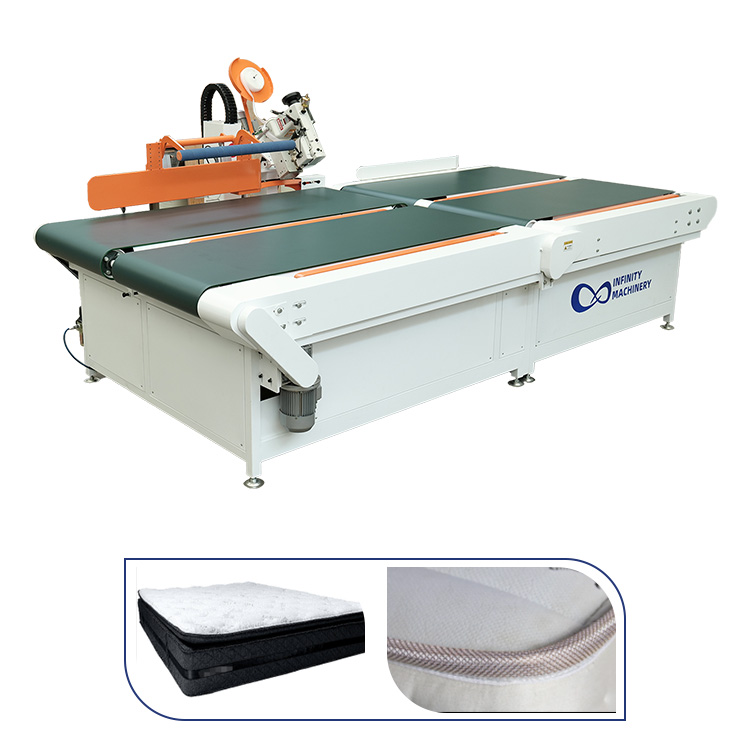
The tape edge process finishes the perimeter of the mattress, attaching the border tape and creating that clean, professional look that customers expect. The IF-T4 Automatic Tape Edge Machine is one of the most important investments you will make. It automates what was previously a highly labor-intensive manual process, dramatically increasing both speed and consistency. A quality tape edge machine can process a mattress in under two minutes, compared to 10-15 minutes by hand.
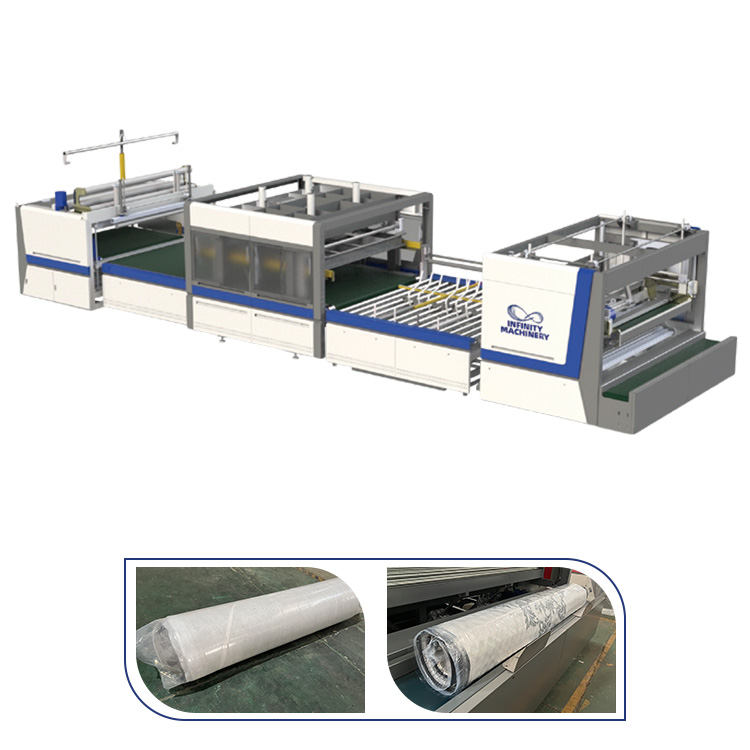
Once the mattress is complete, it needs to be compressed, rolled, and packed for shipping. This is especially important if you plan to sell online or ship internationally, as compressed mattresses take up 60-80% less space. The IF-CR2 Mattress Packing Machine handles the entire compression and bagging process efficiently. I recommend investing in a packing machine early — hand-packing mattresses is slow, inconsistent, and limits your shipping volume.
For manufacturers who want to scale beyond a certain volume, integrating individual machines into a continuous production line is the logical next step. The IF-APL Mattress Automatic Production Line connects multiple processes — from spring assembly to quilting, tape edging, and packing — into a single automated workflow. This reduces labor requirements by up to 60% and increases throughput dramatically. It is a significant investment, but if you are targeting production volumes above 300 mattresses per month, it quickly becomes cost-effective.
Building a reliable supply chain was one of the biggest challenges I faced. The quality of your mattresses depends almost entirely on the quality of your raw materials. Here are the key materials you need to source:
I advise building relationships with at least two suppliers for each critical material. When one supplier faced a production delay in my second year, having a backup supplier kept my factory running. Also, negotiate bulk pricing from the start — even small volume discounts on foam and fabric add up significantly over a year of production.
For inventory management, I use a simple but effective system: maintain a minimum of two weeks of raw material stock and reorder when inventory drops to three weeks. This balances the risk of supply disruptions against the cost of holding inventory. As you grow, you can refine this based on your specific supplier lead times and production schedules.
Understanding the complete production workflow is essential before you arrange your factory floor or train your staff. Here is the step-by-step process I follow for every mattress produced in my factory:
The entire process, from raw materials to finished product, can take as little as 45 minutes per mattress once your team is trained and your workflow is optimized. In the beginning, expect it to take two to three times longer as your staff develops speed and familiarity with the equipment. With an integrated system like the IF-APL Automatic Production Line, you can reduce cycle times even further by automating material transfer between stations.
Quality control is not just about checking finished products — it is a mindset that should permeate every stage of production. In my factory, we follow a three-tier quality control system:
Incoming Material Inspection — Every batch of foam, fabric, springs, and adhesives is tested before entering production. We check foam density and resilience, fabric tensile strength and color consistency, spring wire gauge and temper, and adhesive bond strength. Rejecting poor materials at the receiving dock saves enormous trouble downstream.
In-Process Quality Checks — Each production station has defined quality checkpoints. The quilting operator checks stitch tension and pattern alignment. The tape edge operator inspects corner finish and adhesive bonding. These checks catch issues before they become embedded in a finished mattress.
Final Product Testing — Every mattress undergoes a final inspection that includes: dimensional accuracy (length, width, height within ±5mm), firmness grading (using standardized indentation tests), edge support testing, handle strength testing, and packaging integrity. We also perform destructive testing on sample mattresses from each production batch to measure long-term durability.
Regarding certifications, I strongly recommend pursuing CE marking (essential for the European market), ISO 9001 for quality management systems, and CFR 1633 / BS 7177 for flammability compliance depending on your target markets. These certifications open doors to larger buyers and export opportunities. The process can take 3-6 months, so start early.
Let me be completely transparent about costs. I have broken down the major investment categories based on my own experience and the feedback I have received from fellow factory owners in the Infinity Mattress Machinery community.
For a basic starter setup (50-100 mattresses/month): $50,000 - $120,000. This typically includes a quilting machine, a tape edge machine, a sewing machine, and a packing machine. You would outsource foam cutting and spring manufacturing initially.
For a mid-range setup (100-300 mattresses/month): $120,000 - $280,000. Add a spring coiling machine, a foam cutting machine, and an adhesive application system. At this level, you have full control over your supply chain.
For a full-production line (300-800+ mattresses/month): $280,000 - $500,000+. This includes an integrated automatic production line like the IF-APL, multiple quilting heads, a high-speed tape edge machine, and automated packing systems.
Based on a mid-range mattress selling at $200-$400 wholesale, with a gross margin of 35-45%, a well-managed factory producing 200 mattresses per month can achieve break-even within 12-18 months. The key is to manage your production costs tightly and scale gradually. Do not try to run at full capacity from day one — allow your team to build speed naturally, and use your early months to refine your processes and build your customer base.
A factory without sales is just an expensive warehouse. Building your sales channels should begin months before your first mattress comes off the production line. Here are the channels I have used successfully:
B2B (Business-to-Business) — This is the backbone of most mattress manufacturing businesses. Target hotel chains, hospitals, dormitories, furniture retailers, and bedding wholesalers. B2B customers order in larger quantities and provide recurring revenue. I secured my first major contract with a regional hotel chain by offering customized mattresses at competitive pricing.
B2C (Direct-to-Consumer) — Selling directly online through your own website or through platforms like Amazon and local e-commerce sites. The advantage is higher margins (retail pricing vs wholesale), but you need to invest in marketing, shipping logistics, and customer service.
Trade Shows — Attending international trade shows like Interzum (Germany), ISPA EXPO (USA), and China International Furniture Fair is one of the most effective ways to connect with buyers, distributors, and suppliers. I exhibited at my first trade show with just five mattress samples and a banner — and walked away with three distribution agreements.
Export Opportunities — The global mattress market offers significant export potential, especially for manufacturers in regions with competitive production costs. Key export markets include North America, Europe, the Middle East, and Southeast Asia. Working with an experienced logistics partner who understands mattress shipping regulations is essential.
My advice: start with one or two channels and master them before expanding. I began with B2B sales to local retailers, then expanded to online B2C, and later moved into export. Each channel requires different capabilities and investment, so be strategic about where you focus your resources.
Based on my experience and the feedback from hundreds of mattress manufacturers worldwide, here are three pieces of equipment that I consider essential investments for any new mattress factory. Each of these machines has proven its value in real production environments across the globe.
To help you plan your investment, here is a breakdown of recommended machine configurations at three budget levels. These are based on real setups used by factory owners I have worked with.
Client A — From 3 Machines to Full Production in 2 Years
When I met Client A at a trade show, he was running a small workshop with just three machines: a basic quilting machine, a tape edge machine, and a sewing machine. He was producing about 80 mattresses per month and outsourcing his spring manufacturing and foam cutting to local suppliers. His biggest challenge was consistency — his outsourced springs varied in quality, leading to customer complaints.
We sat down together and planned his expansion step by step. First, he invested in an IF-P130-1 Spring Coiling Machine, bringing spring production in-house and immediately improving quality. Then he added an IF-FZQA Foam Cutter to stop relying on pre-cut foam suppliers. Six months later, he upgraded to a second quilting machine and an automated packing system.
Within two years, Client A went from 80 mattresses per month to over 500 mattresses per month. His factory now occupies 1,800 square meters with 22 employees, and he exports to three countries. He recently added the IF-APL Automatic Production Line to integrate his workflow further. His story shows that you do not need to start with a massive investment — you can grow strategically, reinvesting your profits into equipment that expands your capacity.
"The key was not trying to do everything at once," Client A told me. "I bought machines as my orders grew, not before. Infinity Mattress Machinery helped me plan each phase so my equipment was never sitting idle."
Starting a mattress factory is one of the most rewarding business ventures I have ever undertaken. It combines technical precision with creative design, and it serves a fundamental human need — quality sleep. The journey from my kitchen table to a full-scale production facility was not always smooth, but every challenge taught me something valuable.
Let me summarize the most important lessons I have learned:
The mattress industry is growing, and there has never been a better time to enter it. Whether you are planning a small workshop or a large-scale production facility, the right preparation and the right equipment will set you up for success.
Our team of mattress manufacturing experts can help you plan your factory layout, select the right machinery, and estimate your investment — completely free.
© 2025 Infinity Mattress Machinery — Professional Mattress Production Equipment Manufacturer. All Rights Reserved.