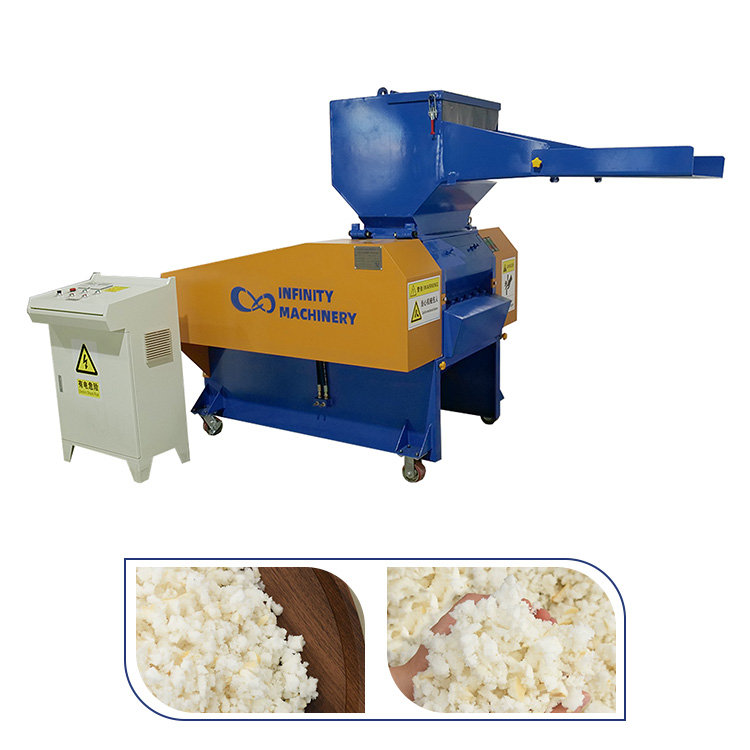
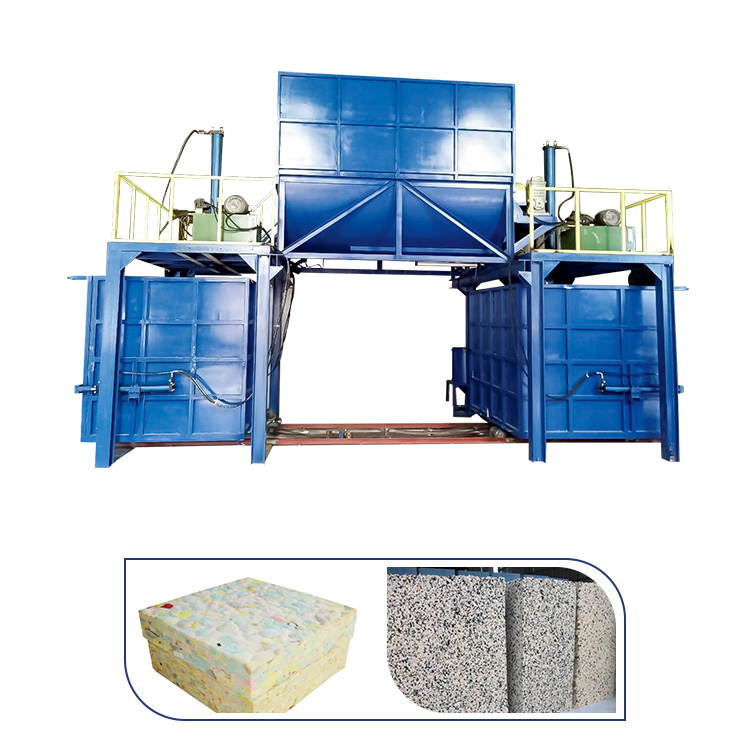
Every foam cutting operation generates waste. Offcuts, trims, and rejected pieces pile up quickly. Many factories pay to have this waste hauled away — losing money on material they already paid for. The IF-FZS Re-Bonding Machine and IF-FFS3 Crushing Machine turn that waste into a valuable resource. This comprehensive guide covers everything you need to know about foam recycling — from understanding the problem to implementing a complete recycling system that pays for itself in months.
The mattress industry is one of the largest consumers of flexible polyurethane foam globally. Every day, thousands of mattress factories across the world cut foam blocks into precise shapes for mattress cores, comfort layers, pillows, and upholstery components. But here's the reality that few manufacturers talk about: 15-25% of all foam purchased becomes waste during the cutting process.
Let's put that into perspective. A mid-sized mattress factory producing 200 mattresses per day typically uses:
That's 45,000-112,500 kg of foam waste every month. At current disposal costs of $0.30-0.50 per kg, you're looking at $13,500-56,250 per month just to get rid of material you already paid for.
Foam waste comes from several sources in the manufacturing process:
1. Edge Trimming: When foam blocks are cut to size, the edges are uneven and must be trimmed. This typically generates 3-5% waste from each block.
2. Shape Cutting: Cutting complex shapes for mattress components (contours, cutouts, holes) leaves behind irregular pieces that cannot be used directly.
3. Quality Rejects: Foam that doesn't meet density, hardness, or appearance specifications must be discarded.
4. Start-up and Shutdown Waste: The beginning and end of each foam production run often produce substandard material.
5. Customer Returns: Returned mattresses often contain foam that cannot be reused in new products.
Most manufacturers only consider the direct disposal cost when calculating waste expenses. But the true cost is much higher:
When you factor in the material cost of the wasted foam, the total expense is staggering. A factory generating 3,000 kg of waste per day is essentially throwing away $6,000-9,000 worth of foam every single day.
Foam recycling is not just an environmental initiative — it's a smart business strategy that transforms a cost center into a profit center. The process involves two key steps:
The resulting rebonded foam blocks can be:
Let's look at the numbers for a typical operation:
That's a swing of $17,850 per month — from losing money to making money on what was previously waste.
The first step in foam recycling is reducing large scraps into uniform crumbs. The IF-FFS3 Crushing Foam Machine is purpose-built for this task, offering high throughput, consistent output, and reliable operation.
The IF-FFS3 uses a rotor with hardened steel blades that spin at high speed. Foam scraps are fed into the hopper, where they are struck by the rotating blades and reduced to small, uniform pieces. The output passes through a screen that determines the final crumb size.
The machine handles all types of flexible polyurethane foam:
Once the foam is crushed into uniform crumbs, the IF-FZS Re-Bonding Foam Machine takes over. This machine mixes the foam crumbs with a one-component polyurethane adhesive binder, then compresses the mixture into dense, uniform blocks.
Implementing a foam recycling system requires careful planning. Here's a step-by-step guide to getting started:
Before purchasing equipment, quantify your foam waste. Track your waste for 2-4 weeks to understand:
Based on your waste volume, select the appropriate machine sizes:
The recycling area should be:
One-component PU adhesive is typically applied at 3-5% by weight. Work with your equipment supplier to identify compatible adhesive suppliers in your region.
Proper training ensures safe operation and consistent output quality. Key training areas include:
One of the most common questions we hear is: "Who buys recycled foam?" The answer: there's a large and growing market for rebonded foam.
1. Packaging Industry: Rebonded foam is widely used as protective packaging for electronics, furniture, and fragile items. It provides excellent cushioning at a fraction of the cost of new foam.
2. Flooring Underlayment: Carpet and laminate flooring require foam underlayment for comfort and sound insulation. Recycled foam is the preferred material for this application.
3. Automotive Industry: Car seats, headliners, and door panels use rebonded foam for comfort and noise reduction.
4. Furniture Manufacturing: Sofa cushions, chair pads, and mattress base layers often use recycled foam to reduce costs.
5. Playground Equipment: Safety surfaces and play mats use high-density rebonded foam for impact absorption.
6. Sports and Recreation: Yoga mats, gym flooring, and protective gear use recycled foam components.
Background: A factory in Monterrey producing 150 mattresses/day was generating 2,000 kg of foam waste daily.
Challenge: Disposal costs of $3,000/month and limited warehouse space for waste storage.
Solution: Installed IF-FFS3 + IF-FZS2 combination.
Results:
Background: A foam processing company in Istanbul cutting 5,000 kg of foam daily for various clients.
Challenge: Environmental regulations tightening, disposal costs increasing annually.
Solution: Installed two IF-FFS3 crushers and one IF-FZS3 re-bonding machine.
Results:
Foam recycling is not just environmentally responsible — it's highly profitable. With the IF-FFS3 Crushing Machine and IF-FZS Re-Bonding Machine, you can transform your biggest waste headache into a significant revenue stream.
The math is simple: every kilogram of foam you recycle is a kilogram you don't have to pay to dispose of, plus a kilogram of product you can sell. With typical payback periods of 2-4 months, foam recycling equipment pays for itself faster than almost any other capital investment in your factory.
Ready to turn your foam waste into profit? Contact us for a free consultation on the right recycling solution for your operation.
Get a free consultation and ROI analysis for your foam recycling project.